My mother taught us all to read before we were three. It caused no end of problems at school because teachers couldn't cope with children who didn't fit in. I dimly remember sitting at the back of the class while teacher was waving flashcards at everybody being very bored.
But I read. We had lots of books at home. I remember my first 'proper' book was Agatha Christie's Five Little Pigs. It was in a purple cover on the bookcase in the upstairs landing. The colour and the title together caught my eye and I picked it off the shelf to read. I was 6. I went through all her books and to this day cannot pick up an Agatha Christie without remembering the story instantly and being completely unenthused by the idea of reading one of her books yet again.
My mother did take me to the library then, at Golders Green. I can barely remember it but it was a regular ritual.
At the age of 7 we moved to Brussels, which did not have an English library. It only had one English bookshop which charged extortionate rates, and still does to this day. However there was an ex-pat community and they had an English library that was housed in someone's unused double garage. We went round and chose the books and paid a token amount per book. It was all written down laboriously by hand but I devoured the books. As Americans flew home and sold up their possessions they left their books to the library so I grew up with far more Nancy Drew and Hardy boys mysteries than I would have otherwise.
Returning to London aged 13 we were in the borough of Westminster; lots of lovely libraries with lots of lovely books. I used to go regularly and would travel to the other libraries to pick through their bookshelves as it cost to have them transferred whereas the bus fare then was a mere 10p (thanks Ken!) if the library was too far away. I did request books not held within the borough and they used to get them for me, frequently arriving with the stamp of the university they belonged to and interesting labelling.
But the highlight of my very happy relationship with libraries was when I requested the autobiography of Lincoln Steffens, the original muckraker. It was not to be found in the library, nor in any university. Eventually I got a letter telling me to present myself at the British Library and I could read it there. It was a routine letter and I thought nothing of it, beyond a certain amount of pleasure at the idea of visiting such a special place. Well the librarians at the British Library were not impressed. The lower age limit for passing through the doors was 21. Occasionally they made exceptions for special young adults but a 15 year old? Not likely. But I waved the letter at them which stated that I could read a book there and probably looked miserable. So they granted me a two week membership of the British Library and luckily I had gone in at the beginning of a holiday.
So for two weeks solid I got up early and was waiting outside when they unlocked the gates and let us library users and staff in ahead of the general public. I read. And I read. Solidly, from 8.30am I think, to 5 o'clock or thereabouts with a quick half hour for lunch. I still have the notes that I made from the books that I read. I started reading the book I originally wanted, then others that I hadn't been able to find. Eventually I just rambled through almost reading books at random, glorying in the idea of being able to order any book I wanted.
I've moved libraries several time since. I have always signed up for the library within a week of moving into the area. I have so many books on my shelves stamped withdrawn from one library or another that I picked up for a paltry sum. When each of my children was born we went and got a library card very early on so they could borrow board books from the library. My 10 year old just recently learned how to order books from the library online all by himself. Now they can visit on their own. At least for the moment.
Libraries are at risk. Philip Pullman has put it far more eloquently than I ever could but books have saved me throughout my life. They've informed me, made me think, taught me facts, explained things, entertained me, made me laugh, cry, sigh and above all made me think. They have posed questions that I was unable to answer as a child or teenager; they've sent me on quests for knowledge and understanding. They've made me dream and escape reality, transformed me to a place where the real world couldn't impinge, where I couldn't even hear it. A library, big or small, is a place of knowledge, of value to be imparted, and stuff and nonsense to be enjoyed. It's part of what makes us civilised and it's certainly part of what make life worth living.
Showing posts with label books. Show all posts
Friday, 28 January 2011
Sunday, 9 January 2011
2010 in Books
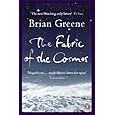
I didn't manage to finish the one book I wanted to over the Christmas holidays, but I did manage to finish a few. Brian Greene's book starts off with Newtonian physics and ends up with superstring theory and beyond. It's very readable considering the subject matter, but I can only take so much of it before my brain needs a rest. I started it last July and am now steaming ahead into the final quarter.
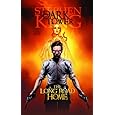
One of the delights which upped my total number of books read was reading the graphic series about Stephen King's The Dark Tower, possibly my all time favourite story, if not the most awesome tale ever told. There are probably over 50 comics in the series so that would explain the sharp rise from 191 books in 2009 to 257 in 2010 The graphic novel of Darwin's On the Origin of Species is also a beautifully drawn book that renders a complicated story accessible to children (and adults).
I love the statistic of how many books I've read this year, but would like that summarised as well as how many pages in total. A really geeky widget would analyse each book according to word and sentence length and appoint an intelligence rating as well. That would be far more telling.
Most of what I read is light fiction. I borrow books by the sackful from the library and get about 20 minutes reading in along with my first cup of tea in the morning before getting up for school. I thoroughly enjoyed being able to browse and reserve books online from my library for free but a charge now applies and, like many others, my library is at risk from cutbacks. I try to read something more challenging at the weekends and in the holidays but often fail miserably. Children addle your brain.
I joined LibraryThing over 2 years ago, with the aim of cataloguing every book as I read it, with the secondary aim of entering all the books I possess to show my library. The widget on the sidebar randomly shows all the books I have read since starting this, sometimes to my shame.
I have a lovely book club full of friends and we read (well most of us do) a great variety of books for our regular gatherings.We take it in turns to choose and the choices can be as revealing as the comments afterwards. Partly because of this and the offer of free books from LibraryThing I have started writing reviews. I don't know whether they're any good but they are honest.
I have a pile of books by my bed and regularly resolve to not buy any more until I've finished them. I always crack eventually but hope one day to not possess a book unread. Then I can start on my long list of books I'd like to read but haven't got round to purchasing.
Wednesday, 29 December 2010
The death of print - bah humbug!
I have recently reviewed a couple of books that were provided in pdf format which has given me the opportunity to really evaluate the difference between reading a physical book and a book in electronic format (be it any brand of electronic book reader or Pads, smartphones, laptops et al). I have occasionally read short stories on my phone but am more likely to use it to catch up on emails or twitter.
Electronic books are practical for so many reasons.
Whenever I go on holiday, half the weight of my luggage is taken up by books. And I still run out of reading material, one of the penalties of being a fast reader. The idea of taking one device with me that can have dozens if not hundreds of books so that I don't have to resort to other people's holiday books left behind is attractive.
It would save space on bookshelves. I currently have 8 bookcases at home and am constantly expanding and running out of room. Not needing to find space for the Encyclopaedia Britannica (other encyclopaedias are available) or other reference books would free up a lot of space.
It would mostly save money once the the device itself has been paid for. Books are substantially cheaper in e-format (typically at least 60% off RRP, although sometimes they are bizarrely more expensive than the printed version) and there's no postage to consider or time expended in visiting a shop or waiting for a delivery or stock to arrive either. The thought and purchase can be virtually instantaneous.
I wonder about the environmental cost though; how long would you have to keep an e-reader for and how many books would you not have to buy to make it better for the planet?
Out of print books are more readily available, although not all, and those books that are available online in non proprietary format such as the Gutenberg Project, can be instantly and freely acquired, thus upping my bibliography substantially at a stroke.
I would have said you can't read them in the bath, but several of my friends tell me they read their laptops and smartphones in the bath without consequences, so maybe you can. But I wouldn't advise dropping it in.
I was able to read my pdfs on my laptop, without my contact lenses in and without getting sore eyes, comfortably, in bed which I have to say was a minimum requirement.
So if they're so practical, what's the hesitation?
I don't want to caress an e-reader . Nor do I want to smell it.
I've recently had the opportunity to take down all my fiction and put them back up again. Any re-arrangement of books offers the opportunity to rediscover books that were hiding and to smell dusty, musty books that have been unloved. The smell of old books is unique.
I love the history of my books, remembering when I first read that copy on my shelf, and when for a few of them, I lost 'that' copy and had to buy another. Seeing the price in pencil on the inside cover, the occasional inscription from a friend who brought me a treasured gift, or the ex-library stamp which dates my purchase according to town purchased; these all give memories to the book. A forgotten bookmark, a railway ticket or a postcard all help to immortalise a particular copy. Food stains too appear occasionally as well as the greasy fingerprint.
As the decades pass and an author's popularity waxes and wanes, the style of covers changes; sometimes they become more lavish with an increase in popularity but each edition is different. The illustrator for a new author's book may be an unknown, but may be swapped for a more popular one as the author increases in popularity, or maybe the original illustrator gains his own popularity and stays. Noting how early an edition and how old the cover demonstrates how long I have been loyal to a long loved author.
Back to practical matters, you cannot flick through an e-reader, glancing at chapter headings and occasional word. You cannot visually see that you're 2/3 of the way through a book. You can't instantly tell how many inches thick a book is; somehow the number of pages doesn't feel comparable.
But it's not about practical matters. If it were I would have bought one. I love the physicality of books, holding them, seeing them up on the shelf, flicking through them, and all the associated memories they bring. Until any kindle / Reader / tablet / smartphone etc. learns how to compete with the emotional attachment of books, books are safe.
Electronic books are practical for so many reasons.
| Amazon Kindle |
It would save space on bookshelves. I currently have 8 bookcases at home and am constantly expanding and running out of room. Not needing to find space for the Encyclopaedia Britannica (other encyclopaedias are available) or other reference books would free up a lot of space.
It would mostly save money once the the device itself has been paid for. Books are substantially cheaper in e-format (typically at least 60% off RRP, although sometimes they are bizarrely more expensive than the printed version) and there's no postage to consider or time expended in visiting a shop or waiting for a delivery or stock to arrive either. The thought and purchase can be virtually instantaneous.
| Sony Reader |
Out of print books are more readily available, although not all, and those books that are available online in non proprietary format such as the Gutenberg Project, can be instantly and freely acquired, thus upping my bibliography substantially at a stroke.
I would have said you can't read them in the bath, but several of my friends tell me they read their laptops and smartphones in the bath without consequences, so maybe you can. But I wouldn't advise dropping it in.
I was able to read my pdfs on my laptop, without my contact lenses in and without getting sore eyes, comfortably, in bed which I have to say was a minimum requirement.
So if they're so practical, what's the hesitation?
![]() |
| Old fashioned, cloth bound, slightly smelly, tatty and definitely loved book |
I've recently had the opportunity to take down all my fiction and put them back up again. Any re-arrangement of books offers the opportunity to rediscover books that were hiding and to smell dusty, musty books that have been unloved. The smell of old books is unique.
I love the history of my books, remembering when I first read that copy on my shelf, and when for a few of them, I lost 'that' copy and had to buy another. Seeing the price in pencil on the inside cover, the occasional inscription from a friend who brought me a treasured gift, or the ex-library stamp which dates my purchase according to town purchased; these all give memories to the book. A forgotten bookmark, a railway ticket or a postcard all help to immortalise a particular copy. Food stains too appear occasionally as well as the greasy fingerprint.
As the decades pass and an author's popularity waxes and wanes, the style of covers changes; sometimes they become more lavish with an increase in popularity but each edition is different. The illustrator for a new author's book may be an unknown, but may be swapped for a more popular one as the author increases in popularity, or maybe the original illustrator gains his own popularity and stays. Noting how early an edition and how old the cover demonstrates how long I have been loyal to a long loved author.
Back to practical matters, you cannot flick through an e-reader, glancing at chapter headings and occasional word. You cannot visually see that you're 2/3 of the way through a book. You can't instantly tell how many inches thick a book is; somehow the number of pages doesn't feel comparable.
But it's not about practical matters. If it were I would have bought one. I love the physicality of books, holding them, seeing them up on the shelf, flicking through them, and all the associated memories they bring. Until any kindle / Reader / tablet / smartphone etc. learns how to compete with the emotional attachment of books, books are safe.
Friday, 1 October 2010
Why Mumfie?
Katharine Tozer wrote maybe half a dozen books about the Wanderings of Mumfie, a small elephant, and his friend Scarecrow.
I had 3 Mumfie books as a child and these were the only books that were passed on to me that my mother had read as a child and then kept. For that reason alone these stories were special to me and remain so. Two of these remain with me, Wanderings of Mumfie (first edition) and a later reprint of Mumfie the Admiral. I leant Mumfie's Magic Box to a friend, now ex, and she promptly moved away to another town.
Mumfie was a normal elephant living with his family who left one day to seek adventures since one never arrived in the post. In the first book, Wanderings of Mumfie he meets his friend, Scarecrow, and together they meet up with Father Christmas and get sent down to earth to be someone's toy. They can come back and visit their family when their child is asleep so it's not a permanent parting. They then go on to have a lot of adventures together.
There is a wry sense of humour in these tales and it's not all sweetness and light. The baddies are dark, evil and I remember as a child being genuinely scared. However together Mumfie and Scarecrow vanquish all evil and while stories may have nasty parts to them everything turns out all right in the end. Mumfie is a mixture of being a brave and courageous elephant and feeling safer when Scarecrow is around to hold his hand. These books were written in the late 30s and 40s and one can't help but wonder about the parallels but I've been unable to find out anything about the author.
There was a puppet TV series of Mumfie back in the late 70s by Mary Tuner and John Read which I completely missed although many people first learned to love Mumfie here, which prompted the books to be re-issued by Carousel.
Britt Allcroft, more famously known for animating Thomas the Tank Engine, produced the animated Magic Adventures of Mumfie in 1996 which also completely passed me by. Turning it into a singing elephant who is all sweet and cutesie seems to me to take away his original identity and his owner, Selina, seems to have been lost completely.
I've spent much of my life wandering around since childhood, and Brentford is where I've put my roots down. Therefore it seems fitting that Mumfie should be my companion on this new journey into the blogosphere. I don't quite know where this is going but I'm going to enjoy the journey.
Wanderings of Mumfie (1935)
Here Comes Mumfie (1936)
Mumfie the Admiral (1937)
Mumfie's Magic Box (1938)
Mumfie's Uncle Samuel (1939)
Mumfie Marches On (1942)
I had 3 Mumfie books as a child and these were the only books that were passed on to me that my mother had read as a child and then kept. For that reason alone these stories were special to me and remain so. Two of these remain with me, Wanderings of Mumfie (first edition) and a later reprint of Mumfie the Admiral. I leant Mumfie's Magic Box to a friend, now ex, and she promptly moved away to another town.
Mumfie was a normal elephant living with his family who left one day to seek adventures since one never arrived in the post. In the first book, Wanderings of Mumfie he meets his friend, Scarecrow, and together they meet up with Father Christmas and get sent down to earth to be someone's toy. They can come back and visit their family when their child is asleep so it's not a permanent parting. They then go on to have a lot of adventures together.
There is a wry sense of humour in these tales and it's not all sweetness and light. The baddies are dark, evil and I remember as a child being genuinely scared. However together Mumfie and Scarecrow vanquish all evil and while stories may have nasty parts to them everything turns out all right in the end. Mumfie is a mixture of being a brave and courageous elephant and feeling safer when Scarecrow is around to hold his hand. These books were written in the late 30s and 40s and one can't help but wonder about the parallels but I've been unable to find out anything about the author.
There was a puppet TV series of Mumfie back in the late 70s by Mary Tuner and John Read which I completely missed although many people first learned to love Mumfie here, which prompted the books to be re-issued by Carousel.
Britt Allcroft, more famously known for animating Thomas the Tank Engine, produced the animated Magic Adventures of Mumfie in 1996 which also completely passed me by. Turning it into a singing elephant who is all sweet and cutesie seems to me to take away his original identity and his owner, Selina, seems to have been lost completely.
I've spent much of my life wandering around since childhood, and Brentford is where I've put my roots down. Therefore it seems fitting that Mumfie should be my companion on this new journey into the blogosphere. I don't quite know where this is going but I'm going to enjoy the journey.
Wanderings of Mumfie (1935)
Here Comes Mumfie (1936)
Mumfie the Admiral (1937)
Mumfie's Magic Box (1938)
Mumfie's Uncle Samuel (1939)
Mumfie Marches On (1942)
Subscribe to:
Posts (Atom)